
|
||
|
||
|
HART is based in Pokhara and Chitwan and is engaged in animal welfare work throughout Nepal.
Mr T Shrestha
Technical Advisor: Dr R Lyon Legal Advisor: Mr K Devkota Regional Advisor: Mr R Bhattachan UK Advisors and Administration:
Ms B Webb
HAT(UK)
Himalayan Animal Treatment Centre (UK), HAT(UK), is registered with the Charity Commission in the UK - number 1115822.
|
About usWhy
HART exists to try to redress some of the suffering endured by animals that are without power to control their lives. Neglect, cruelty and ignorance combine to make the world a hostile place for many creatures.
Nepal is an area where rabies is endemic, which means there is a continued risk of infection. Dogs are the main source of infection in Nepal, which has led to fear of street dogs in many communities. Misinformation regarding rabies has fuelled conflicts between humans and dogs leading to culling and cruelty. An important goal is to reduce the risks of rabies through anti-rabies vaccination and dog population management programmes, along with awareness campaigns. Find out more about our Programmes Nepal
Nepal suffered many years of political turmoil in the 1990s and early 2000s. A new constitution was enacted in September 2015 following a devastating earthquake in April that year. Animal welfare is a low priority among many other pressing concerns. HART was established in 2010 to reduce animal suffering thoughout the country from its bases in Pokhara and Chitwan.
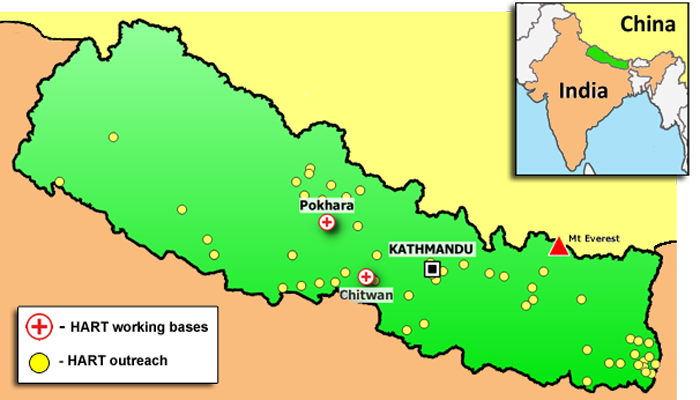
PokharaPokhara was originally a market town, but has grown into a tourist destination over the past thirty years. It is about 200km from Kathmandu and is growing rapidly after amalgamating with the adjacent town of Lekhnath. An international airport opened in 2023.It's situated near Lake Fewa at the base of the Annapurna range foothills and is regarded as Nepal's second city. HART works from a purpose built clinic in Titepani, across the Damside of the Fewa Lake. Over the years a number of groups and individual enthusiastic animal lovers have evolved to join HART to improve street animal lives. They feed dogs and contact the clinic when treatments or neutering are needed. ChitwanChitwan is a national park in central southern Nepal. The main market town in the area is Bharatpur where HART was based for 10 years. In 2023 it moved to the adjacent town of Ratnanagar where it shares a compound with the Municipal Veterinary Dept.This is a large flat sprawling urban area, surrounded by farming activities and containing the National Park and its tourist village, Sauraha, as well as two of Nepal's four vet schools. The network of animal lovers in Chitwan is less developed than in Pokhara but some progress is being made in community working. Outreach workIn addition to continuing programmes in its base towns, HART responds to Municipalities throughout the country who require assistance in transitioning from culling their street dog populations to managing these populations humanely. This additional work takes place in the form of temporary veterinary camps where street animals are neutered, treated and vaccinated in large numbers. |
|
|
Copyright © 2010-2024 Himalayan Animal Rescue Trust | All rights reserved
|
||